


Many people know HbA1c is used to monitor diabetes, but fewer realise that blood sugar levels can have a significant impact on oral health. In fact, there is a close two-way relationship between diabetes and gum disease.[1][2]
At Dental Rooms Wimbledon, we take a whole-body approach to dentistry. Understanding your HbA1c level can help us tailor your dental care and support healing after treatment.
What is HbA1c?
HbA1c is a blood test that measures your average blood glucose over the past two to three months. It helps identify pre-diabetes and diabetes and shows how well blood sugar is being controlled.[1]
Why Does HbA1c Matter in Dentistry?
Healthy blood sugar levels allow your body to:
- fight infection
- heal wounds
- produce healthy collagen
- maintain healthy gums
- support bone healing
When blood sugar is poorly controlled, healing may take longer, increasing the risk of infection following dental procedures.[3]
Diabetes and Gum Disease
People with elevated HbA1c are more likely to develop:
- bleeding gums
- swollen gums
- bad breath
- loose teeth
- gum recession
- bone loss around teeth
- periodontal disease[2][4]
Likewise, severe gum disease can make it harder to control blood sugar, creating a cycle of inflammation.
HbA1c and Dental Implants
Dental implants depend on healthy bone healing.
Poorly controlled diabetes may increase the risk of:
- delayed healing
- peri-implantitis
- infection
- implant complications
Patients with well-controlled HbA1c generally experience implant success rates comparable to non-diabetic individuals.[5][6]
HbA1c and Other Dental Treatments
Blood sugar control can influence healing following:
- tooth extractions
- implant placement
- bone grafting
- periodontal surgery
- gum treatments
- oral surgery
Benefits of HbA1c Testing
A simple HbA1c test may help:
- identify undiagnosed diabetes
- personalise dental treatment
- optimise healing
- reduce complications
- support successful implant treatment
- improve long-term gum health
- encourage better overall health
Who Should Consider HbA1c Testing?
You may benefit if you:
- have diabetes or pre-diabetes
- have a family history of diabetes
- experience persistent gum disease
- have slow healing after dental treatment
- frequently develop oral infections
are planning dental implants or oral surgery
FAQs
Can diabetes cause gum disease?
Yes. Diabetes increases the risk of gum disease, and untreated gum disease can also make diabetes more difficult to manage.[2]
Can I still have dental implants if I have diabetes?
Yes. Most patients with well-controlled diabetes can successfully receive dental implants following a comprehensive assessment.
Why might my dentist recommend HbA1c testing?
To better understand your healing potential and ensure treatment is planned safely.
Does treating gum disease improve blood sugar?
Research suggests effective periodontal treatment may contribute to improved HbA1c levels in some patients.[4]
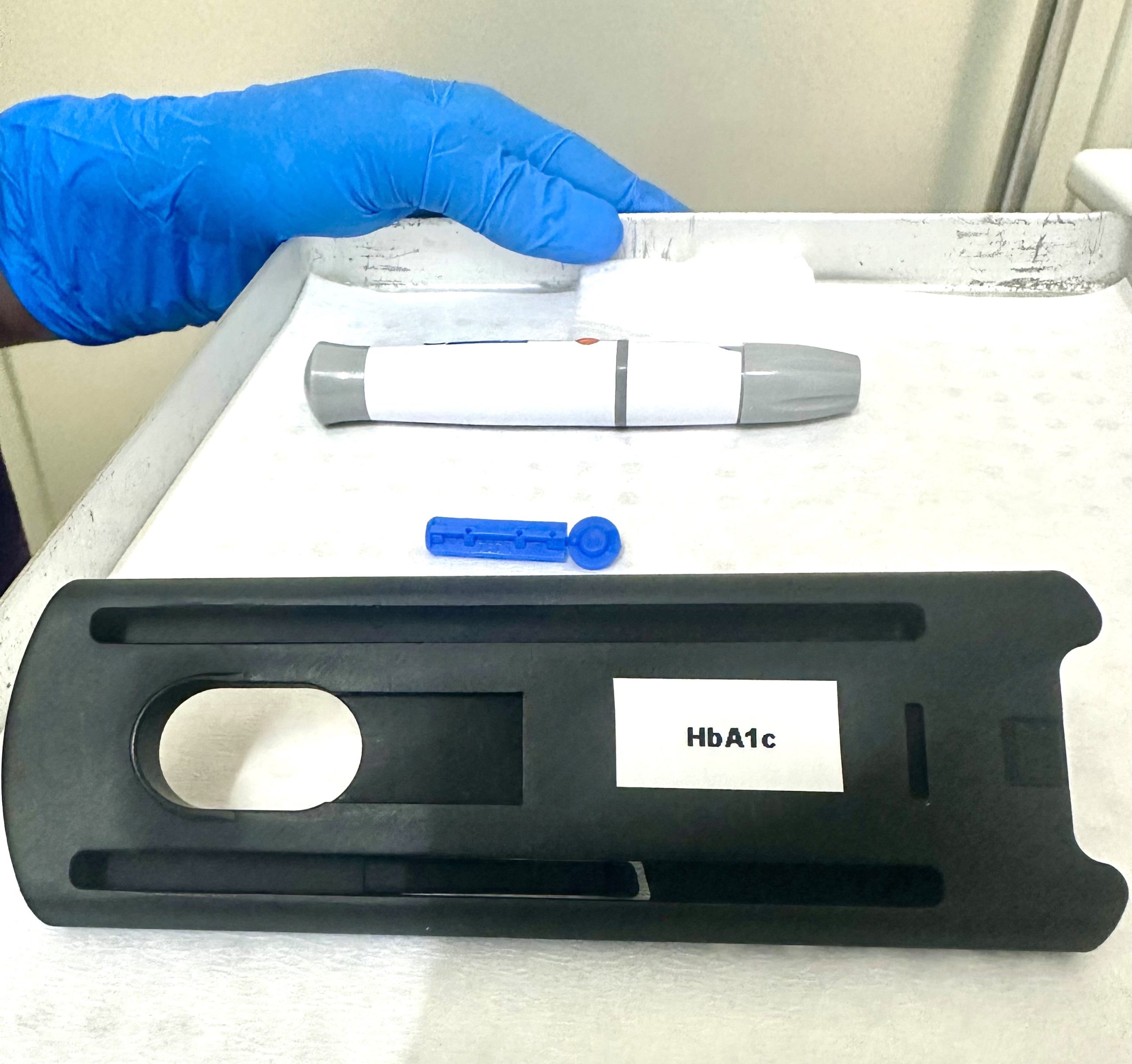
Caring for Your Smile and Your Health At Dental Rooms Wimbledon, we believe excellent dentistry starts with understanding the bigger picture. Chairside blood testing for markers such as HbA1c can help us personalise your care, particularly if you’re considering dental implants, gum treatment or oral surgery. Call us on 020 8946 2426
References – HbA1c, Diabetes & Oral Health Blog
1. NHS
HbA1c Test
https://www.nhs.uk/conditions/type-2-diabetes/hba1c-test/
2. British Dental Journal
Preshaw PM, Bissett SM.
Periodontitis and Diabetes.
2019.
https://www.nature.com/articles/s41415-019-0794-5
3. British Dental Journal
Evidence Summary: The Relationship Between Oral Diseases and Diabetes
https://www.nature.com/articles/sj.bdj.2017.544
4. British Dental Journal
Diabetes and Periodontal Disease: A Two-Way Relationship
https://www.nature.com/articles/sj.bdj.2014.907
5. British Dental Journal
Diabetes – Periodontal and Implant Complications
https://www.nature.com/articles/s41415-022-5274-7
6. European Federation of Periodontology (EFP)
Diabetes and Periodontal Diseases
https://www.efp.org/
7. American Diabetes Association
Oral Health and Hygiene
https://diabetes.org/
8. British Society of Periodontology
9. British Dental Journal
Early Case Detection of Diabetes in Dental Practice
https://www.nature.com/articles/s41415-023-6493-2
10. British Dental Journal
Periodontal Therapy and Long-term HbA1c
https://www.nature.com/articles/s41415-025-9215-0
11. BDJ Team
Periodontitis and Diabetes
https://www.nature.com/articles/s41407-020-0311-3